
Key points
Keep photos of the affected materials and records of when the water damage was noticed. Your policy's terms and the insurer's review determine coverage; cleanup photos, moisture readings and a written scope document the loss.
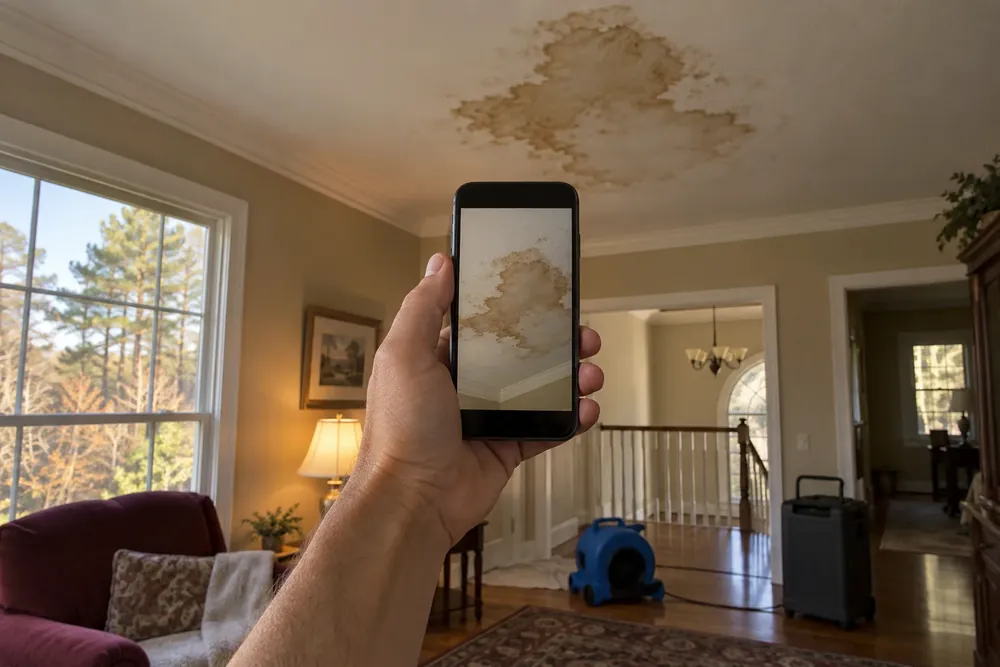
A plumbing leak, a roof opening and poor drainage can leave similar wet patches in a Roswell house, even though the causes differ. The location of the stain alone doesn't explain the loss. Call for cleanup and describe the water's apparent source; details about timing and spread can be recorded during the assessment.
Sudden Leaks and Gradual Damage Differ
A pipe that breaks unexpectedly may cause damage treated differently from a slow leak that continues over time. Homeowners policies commonly address sudden, accidental plumbing discharge, subject to exclusions and conditions. Coverage for gradual leakage and maintenance problems depends on the policy's terms.
For water damage, home insurance decisions depend on the cause and the contract, not simply whether a floor is wet. Record when you discovered the problem and what you actually observed. Separate known facts from guesses about how long water was present. A newly noticed stain doesn't prove the leak began that day.
Your insurer explains how the policy applies to the reported loss. Repairing the failed pipe or appliance and restoring the damaged room are separate tasks, so keep those descriptions distinct in the records.
Photos Preserve Visible Evidence
Water marks and damaged finishes can change during cleanup, making early photographs useful when taking them is safe. Start with a wide view showing the room, then capture closer views of the affected materials. You don't need a finished photo collection to call about the cleanup.
- Photograph water lines, staining and swelling on walls or floors.
- Capture the suspected source from a safe position.
- Record affected furniture and other belongings.
- Photograph appliance model and serial numbers when accessible.
- Keep the original files with dates and brief descriptions.
- Save cleanup and repair invoices with the damage records.
Avoid standing beneath a drooping ceiling or entering water near electrical equipment to get a picture. Explain inaccessible areas during the call so your technician knows about the hazard.
Measurements Describe Hidden Moisture
A wall that looks intact can still contain moisture beyond the painted surface. One of our local water damage partners provides documentation of the cleanup findings through photos, moisture readings and a written scope. Those records describe the inspected damage and proposed work.
For water damage restoration, insurance review remains with the insurer. A reading can document a wet material, but it doesn't determine whether a policy covers the cause. Keep inspection records, drying logs and scope revisions together so the documentation shows both the initial condition and subsequent work.
Floodwater Requires Separate Coverage
Water entering from rising water or runoff generally falls outside a standard homeowners policy. Georgia's insurance office explains that flood coverage is purchased separately. A wet basement doesn't identify the policy involved: water from an indoor pipe and water entering from outside have different causes.
The Georgia Office of Insurance and Safety Fire Commissioner's home insurance consumer page explains policy basics and separate coverage for floods. Use the insurer handling your policy for questions about the reported event, applicable coverage and required records.
Warranty Terms Address a Different Contract
A failed appliance can involve a warranty or service contract as well as damage to the surrounding room. Searching "does warranty cover water damage" doesn't establish which contract applies. A home service contract may address listed appliance repairs; coverage for wet cabinets, flooring or ceilings depends on the actual terms. Keep appliance repair paperwork separate from the cleanup scope.
The Damage Record Supports the Review
Missing dates or vague descriptions can leave gaps in the water damage claim process. Report observations accurately, preserve correspondence and send the documents your insurer requests. Cleanup documentation supplies evidence of conditions and work; coverage decisions belong to the insurer. Call about active water damage now and share the discovery details during the conversation.