
Key points
Water mitigation limits further damage by addressing the water source, extracting standing water, drying wet materials and protecting salvageable belongings. Water damage restoration repairs or replaces damaged building finishes, including drywall, flooring and paint, after the affected materials meet the drying plan's moisture targets. The work may be arranged together, but rebuilding follows moisture assessment and drying.
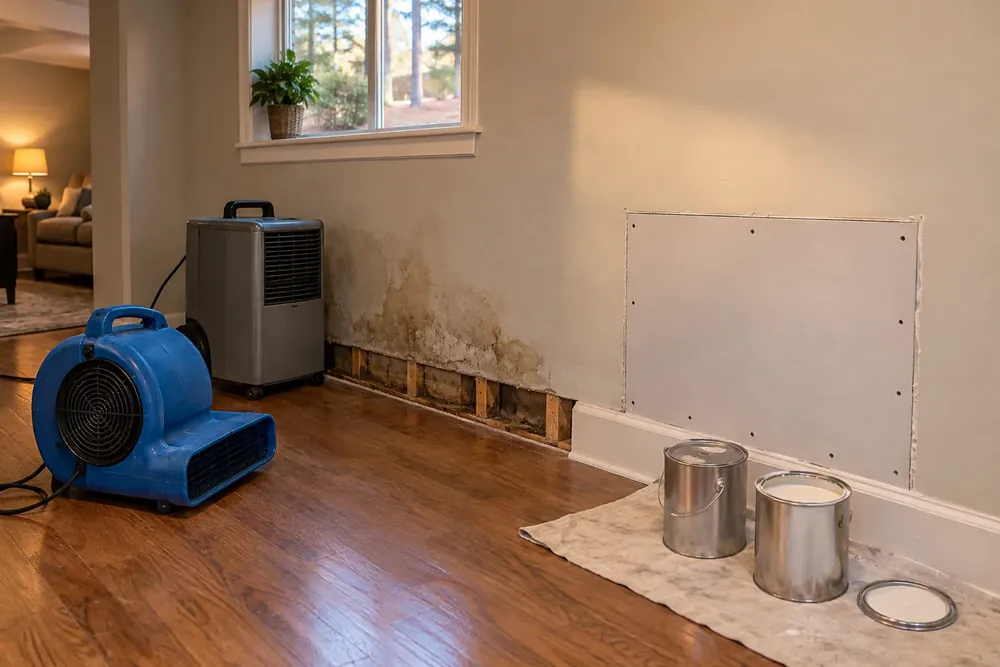
Water from a household leak can soak flooring and wall cavities even after a Roswell homeowner has wiped the surface dry. That leaves two practical needs: limit further damage, then repair what can't be retained. Call about the wet rooms now; the conversation can start with the visible damage rather than the terminology on an estimate.
Mitigation Limits Further Water Damage
Standing water and damp building materials need extraction, moisture assessment and controlled drying before finish repairs proceed. Mitigation focuses on limiting the loss. The leaking source also needs attention, which may involve a plumber or another appropriate trade alongside cleanup.
Your technician checks where water has traveled, identifies affected materials and explains what can be dried. Depending on the conditions, the work includes removing standing water, protecting contents, opening access to trapped moisture and removing materials that cannot be retained. Air movement and dehumidification then support drying, with moisture readings used to track progress.
A search for water damage restoration services near me can bring up help with both drying and rebuilding. Describe whether water is still entering, whether rooms are wet and whether any materials have already been removed. Those details help frame the work without requiring you to diagnose hidden damage.
Restoration Repairs the Affected Rooms
Damaged drywall, flooring and painted surfaces need repair or replacement once the underlying moisture has been addressed. Restoration concerns the room's finished condition. Depending on the written scope, repairs might include replacing insulation and drywall, fitting new baseboards, repairing flooring and preparing surfaces for paint.
Water damage restoration services should be described by the actual tasks included in the estimate. A water damage restoration service that covers extraction and drying may have a separate rebuilding scope. Ask during the conversation which repairs are included and which trades will carry them out.
Drying Determines When Rebuilding Starts
Moisture trapped beneath new finishes can leave a repaired room with unresolved damage. A floor that feels dry to the touch may still have damp underlayment or subflooring. Your technician uses material readings and the drying plan to determine readiness, rather than relying only on appearance or the number of days equipment has run.
If you look up water damage restoration near me after a pipe repair, describe any remaining stains, odors or floor movement. The absence of standing water doesn't establish that concealed materials are dry. Structural drying and dehumidification addresses that remaining moisture before new finishes cover the area.
Different Trades Handle Different Parts of the Work
Leak repair, moisture control and rebuilding require different tasks, even when they are coordinated through one scope. A plumber repairs a failed supply line; drying technicians assess and dry affected materials; repair trades handle drywall, flooring or painting as specified.
A water damage restoration company may coordinate several stages or arrange particular repair trades. Water damage restoration companies can describe their scopes differently, so compare the listed work rather than assuming every estimate includes the same steps. Results for water damage restoration companies near me are a starting point for that conversation, not a substitute for a written scope.
One of our local water damage partners reviews the proposed work and explains the charges before you authorize the start. Keep extraction, equipment use, material removal and rebuilding distinguishable so you can understand the estimate.
Documentation Separates Drying from Repairs
An estimate that combines drying and rebuilding under one label can obscure what each task covers. For insurance documentation, keep a record that identifies the affected rooms, the measured moisture and the work proposed. Useful items include:
- Photographs showing visible damage and areas opened for access.
- Dated moisture readings identifying the materials tested.
- A written mitigation scope with equipment and removal tasks.
- A repair scope listing replacement materials and finish work.
- Itemized invoices corresponding to the work performed.
Those records describe the damage and the work; they don't determine policy coverage or claim approval. The insurance documentation guide explains which records to keep. Call and describe the current room conditions so the next steps follow the damage rather than an unfamiliar label.